
colony630

Wood vs. Vinyl vs. Aluminum Fencing: Which Is Best for Alabama’s Gulf Coast Climate?
Choosing the right fencing for Alabama’s Gulf Coast climate is a different challenge than picking a fence almost anywhere else in the country. Between salt air rolling in off Mobile Bay, thick summer humidity, and the very real chance of a tropical storm or hurricane, a fence on the Eastern Shore has to work harder than one in a drier, inland climate. This guide breaks down how wood, vinyl, and aluminum fencing actually perform in coastal Alabama conditions, so you can choose the material that fits your budget, your property, and how much upkeep you’re willing to do.
Why Climate Matters More Here Than Almost Anywhere Else
Coastal air carries fine salt particles that settle on every outdoor surface, and humidity above roughly 60 percent, which is close to the year-round baseline in Baldwin County, can roughly double corrosion rates on untreated metal compared to a drier inland climate. That means the same fence style that lasts 20 years in central Alabama might show rust, rot, or warping in half that time along the coast if it isn’t built with the right materials and hardware from day one.
Wood Fencing on the Gulf Coast
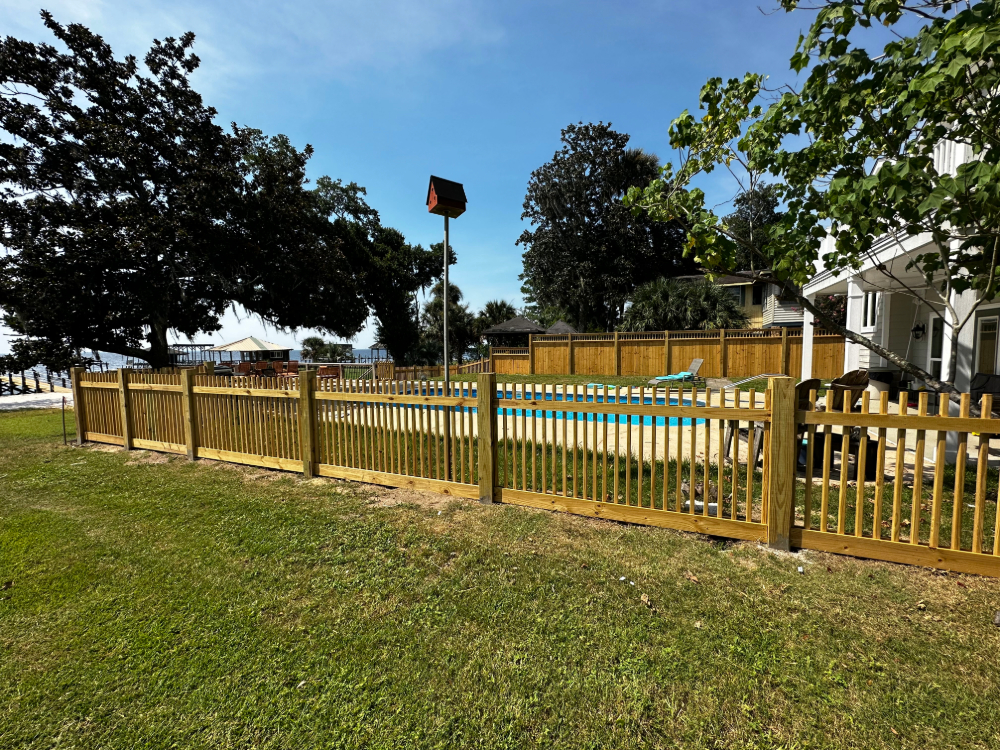
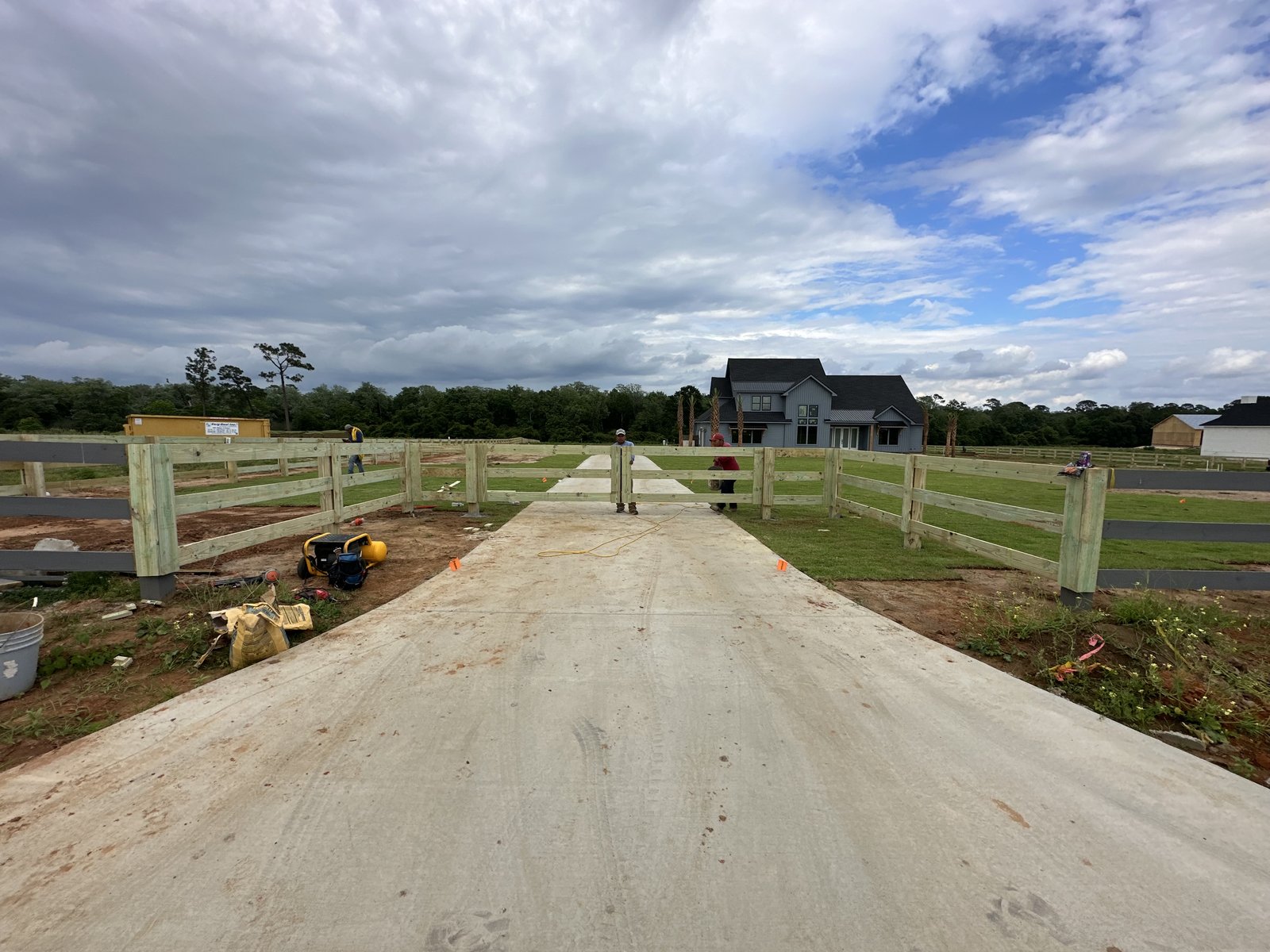
Wood remains the most popular choice for privacy fencing because of its classic look and lower upfront cost. Cedar and pressure-treated pine both hold up reasonably well near the coast, but neither is maintenance-free.
Pros
- Lower initial cost than vinyl or aluminum
- Classic curb appeal that suits Fairhope and Daphne’s Southern architecture
- Easy to repair a single board or section without replacing the whole fence
Cons
- Requires regular sealing or staining to resist moisture and salt exposure
- Untreated or neglected wood can warp, splinter, or rot faster in humid coastal air
- Shorter lifespan than vinyl or aluminum if maintenance is skipped
If you go with wood, coastal-treated lumber and stainless or hot-dip galvanized fasteners are worth the upgrade. Plain steel screws and hinges corrode quickly this close to the water, and that’s usually the first thing to fail on a coastal wood fence.
Vinyl Fencing on the Gulf Coast
Vinyl (PVC) fencing has become one of the top choices for coastal homeowners because it simply doesn’t absorb moisture the way wood does. It won’t rot, split, or attract termites, and it holds its color well under the intense Gulf Coast sun.
Pros
- Doesn’t rot, corrode, or absorb moisture
- Virtually no annual maintenance — no staining or sealing required
- Resists termites and other wood-boring pests common in South Alabama
- Holds up well against salt air and humidity long-term
Cons
- Higher upfront cost than wood
- Solid privacy panels can act like a sail in high winds if not installed correctly
- Repairs typically mean replacing a full panel rather than a single board
For homeowners who want a privacy fence but don’t want the yearly upkeep that comes with wood, vinyl is often the best long-term value on the coast, especially for properties closer to the bay or Gulf where salt exposure is highest.
Aluminum Fencing on the Gulf Coast
Aluminum is widely considered the most weather-resistant metal fencing option for coastal environments. Unlike steel or wrought iron, aluminum forms a natural oxide layer that resists rust, and a quality powder-coat finish adds an extra layer of protection against salt air.
Pros
- Naturally rust-resistant, even with heavy salt air exposure
- Lightweight yet strong, and open picket styles let wind pass through during storms
- Powder-coated finishes hold their color for years with minimal fading
- Ideal for pool enclosures, where code compliance and corrosion resistance both matter
Cons
- Higher upfront cost, especially for custom or ornamental designs
- Open picket styles offer little to no privacy
- Hardware quality matters — cheap fasteners can still corrode even on a quality aluminum fence
Aluminum is a strong fit for pool fencing, front-yard ornamental fencing, and properties directly on the water where salt exposure is most severe.
Side-by-Side Comparison
| Factor | Wood | Vinyl | Aluminum |
|---|---|---|---|
| Upfront Cost | $ | $$ | $$–$$$ |
| Salt Air Resistance | Moderate (with treatment) | Excellent | Excellent |
| Maintenance | Annual staining/sealing | Minimal | Minimal |
| Privacy | High | High | Low (ornamental style) |
| Wind/Storm Performance | Moderate | Good if properly installed | Excellent (open design) |
| Typical Lifespan | 10–20 years | 20–30 years | 20–30+ years |
Which Fence Material Should You Choose?
There’s no single right answer, since it depends on what you’re prioritizing:
- Choose wood if you want classic curb appeal at the lowest upfront cost and don’t mind annual maintenance.
- Choose vinyl if you want privacy with minimal upkeep and strong long-term resistance to Gulf Coast humidity and salt air.
- Choose aluminum if you’re fencing a pool, need code-compliant enclosure fencing, or want a low-maintenance ornamental fence that can take direct salt exposure without rusting.
Whatever direction you lean, the hardware matters just as much as the fence panels themselves. Stainless steel or hot-dip galvanized fasteners, proper post depth, and correctly graded materials all make the difference between a fence that lasts two decades on the Eastern Shore and one that needs repairs after the first few storm seasons. If you’re weighing repair versus replacement on an existing fence, our guide on storm damage and fence repair covers what to look for.
Get Expert Fencing Advice for Your Baldwin County Property
Since 2008, Colony Fence has installed wood, vinyl, and aluminum fencing throughout Fairhope, Daphne, Spanish Fort, Foley, Gulf Shores, Orange Beach, Robertsdale, and Elberta. We know which materials and hardware actually hold up to salt air, humidity, and hurricane season on the Eastern Shore. Browse our full fencing services or request a free quote to find the right fit for your property.
Frequently Asked Questions
Does salt air really damage fences that aren’t right on the beach?
Yes. Salt particles carried by coastal winds can affect properties several miles inland, and Baldwin County’s consistently high humidity accelerates corrosion on untreated metal and unsealed wood even away from the immediate waterfront.
What’s the most low-maintenance fence material for the Gulf Coast?
Vinyl and aluminum both require minimal upkeep. Vinyl needs occasional rinsing to remove salt residue, while aluminum benefits from a quality powder-coat finish and periodic hardware checks.
Is wood fencing a bad choice near the coast?
Not necessarily. Cedar and pressure-treated pine can perform well if properly sealed and maintained with coastal-grade fasteners, but they require more ongoing care than vinyl or aluminum.
Which fence material handles hurricane-force wind best?
Open picket styles like aluminum ornamental fencing let wind pass through rather than catching it, which generally makes them more storm-resistant than solid privacy panels. Proper post depth matters for every material.