
colony630
Do You Need a Permit to Build a Fence in Fairhope or Baldwin County?
If you’re planning a new fence on the Eastern Shore, one of the first questions to answer isn’t about material or cost, it’s whether you need a fence permit in Fairhope or Baldwin County. Skipping this step can mean fines, a stop-work order, or having to tear out a fence you just paid to install. Here’s what homeowners actually need to know before breaking ground in 2026.
Does Alabama Have a Statewide Fence Permit Law?
No. Alabama sets a statewide residential building code through the state’s Home Builders Licensure Board, but fence regulations themselves, including permits, height limits, materials, and setbacks, are left entirely to local city and county governments. That means the rules that apply to your property depend entirely on whether you’re inside Fairhope’s city limits or in unincorporated Baldwin County, and the two aren’t always the same.
Fence Permits in the City of Fairhope
If your property sits within Fairhope city limits, fence permits are handled by the City of Fairhope Building & Permitting Department, with applications submitted through the city’s online Citizenserve portal. Depending on where your property is located, you may also need to account for:
- Historic district guidelines, particularly in Fairhope’s Fruit & Nut District, where placement, material, height, and color may all be reviewed
- Tree protection requirements if fence posts fall near protected trees
- HOA rules, which can be stricter than city code even when a permit isn’t otherwise required
Fence Permits in Unincorporated Baldwin County
Outside city limits, permits go through the Baldwin County Building Inspection Department, also via Citizenserve. It’s worth knowing that building permit requirements and zoning requirements are treated separately in Baldwin County. Even after a building permit is issued, you’re still responsible for confirming setbacks and any zoning conditions with the county’s Planning & Zoning Department before construction starts. In areas where county zoning has been established, wall and fence height standards apply specifically within certain residential zoning districts (RSF and RTF/RMF categories), so a fence that’s fine on one unincorporated parcel may not be automatically fine on another.
If your property sits in a county historic or preservation district, fencing applications also need to include placement, material, height, and color details for review by the Architectural Preservation Review Board.
Typical Height and Setback Rules to Know
While exact numbers can vary by zoning district, most residential fence rules in Alabama follow a similar general pattern:
- Front yard fences facing the street are typically capped around 4 feet
- Side and rear yard fences can usually go taller, often up to 6 to 8 feet depending on the zoning district
- Corner lots often have additional setback requirements to preserve sightlines at intersections
- Fences within a few feet of an alley or public right-of-way may be restricted regardless of height
These are general patterns, not guarantees for your specific lot. The only way to know your exact limits is to confirm with the applicable building department before you order materials.
Pool Fence Requirements
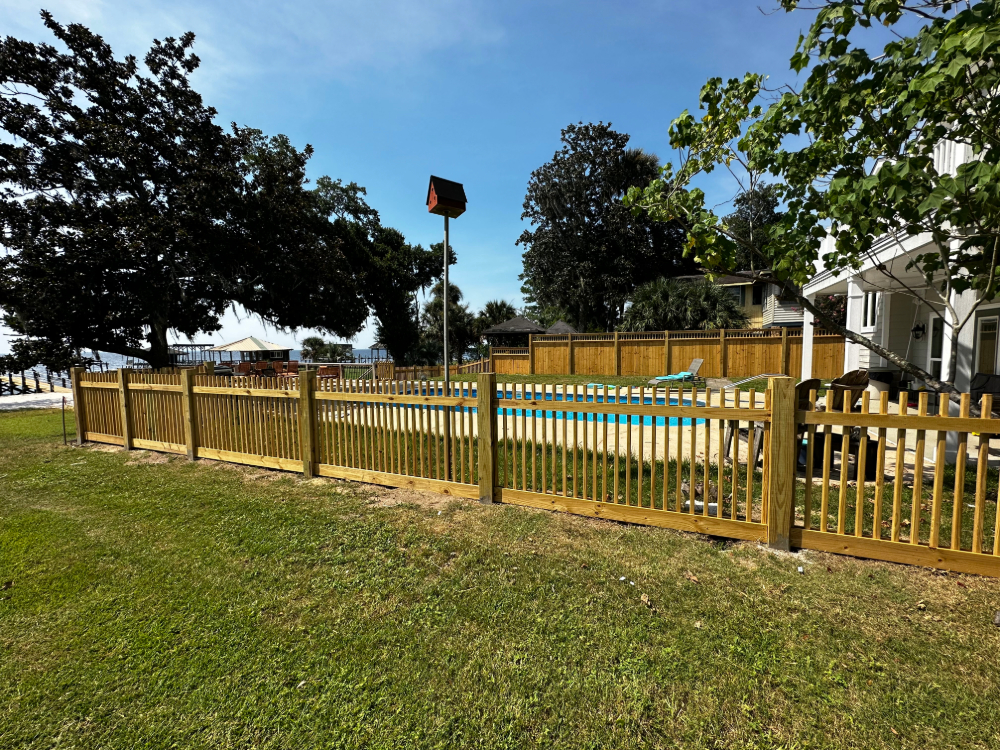
If you’re fencing a pool, the rules get stricter for safety reasons. Fairhope requires pool barriers to meet local safety code, which generally means a minimum fence height of 48 inches along with self-closing, self-latching gate hardware. This is one area where cutting corners isn’t worth the risk. It’s a life-safety requirement, and inspectors check it closely before a pool can be used.
What Happens If You Build Without a Permit?
Skipping the permit process can create bigger problems than the fence itself:
- Fines and a stop-work order until the issue is resolved
- Having to modify or remove a completed fence that doesn’t meet code
- Complications when selling the home, since unpermitted work can surface during a buyer’s inspection or appraisal
- Potential disputes with neighbors over property lines and setbacks that a permitted survey would have caught early
Even a straightforward fence replacement using similar materials to what’s already there can still require a new permit, so it’s worth checking rather than assuming the old fence’s status carries over.
HOA Rules Can Be Stricter Than City or County Code
Many Eastern Shore neighborhoods, especially newer developments in Fairhope, Daphne, and Spanish Fort, have HOA covenants that regulate fence height, material, and even color beyond what the city or county requires. Getting a city or county permit doesn’t automatically mean your HOA will approve the same fence, so it’s worth checking both before finalizing your plans.
How Colony Fence Helps You Navigate Permits
Since 2008, Colony Fence has built residential and commercial fencing throughout Fairhope, Daphne, Spanish Fort, Foley, Gulf Shores, Orange Beach, Robertsdale, and Elberta. We work within these permit requirements every week, so we can tell you upfront whether your project needs a permit, what height and setback rules apply to your property, and what documentation the city or county will want to see. Browse our fencing services or request a free quote, and we’ll help you plan a fence that’s built right and approved without delays.
Frequently Asked Questions
Do I need a permit to replace an old fence with a new one?
Often yes, even if the new fence uses similar materials and dimensions to the old one. Check with the applicable building department before starting, since assuming your old fence’s approval carries over can lead to a stop-work order.
How do I know if my property is in Fairhope city limits or unincorporated Baldwin County?
Your property tax records or a quick call to the Baldwin County Revenue Commissioner’s office will confirm this, since it determines which building department handles your permit.
Does my HOA’s approval count as a permit?
No. HOA approval and a city or county building permit are two separate processes. You typically need both, and satisfying one doesn’t automatically satisfy the other.
How long does it take to get a fence permit approved?
Timelines vary by jurisdiction and current application volume. Submitting a complete application with an accurate site plan, materials, and height details upfront is the best way to avoid delays.